Team
Responsibilities
Duration
Overview
Public transport is widely used due to its affordability, but it often lacks first-mile and last-mile connectivity. Our next major focus is to integrate all public transportation into a single journey with Namma Yatri.
This initiative will tackle the challenge of first and last-mile connectivity, offering users a seamless, efficient, and comprehensive travel experience.
Business Goal
Support Namma Yatri’s expansion by differentiating its offering, driving public transport adoption, and unlocking new revenue streams, without losing the simplicity and trust users love.
Understanding the Audience
25% - 30% Indian urban commuters rely on public transport daily
Public transport networks remain fragmented, leading to poor first-and last-mile connectivity.
Assurance of an auto for the first or last mile was seen as a make-or-break factor for adoption.
Price sensitivity was high — even small differences compared to direct rides influenced decisions.
What we learned from competitors
Route discovery and time comparison
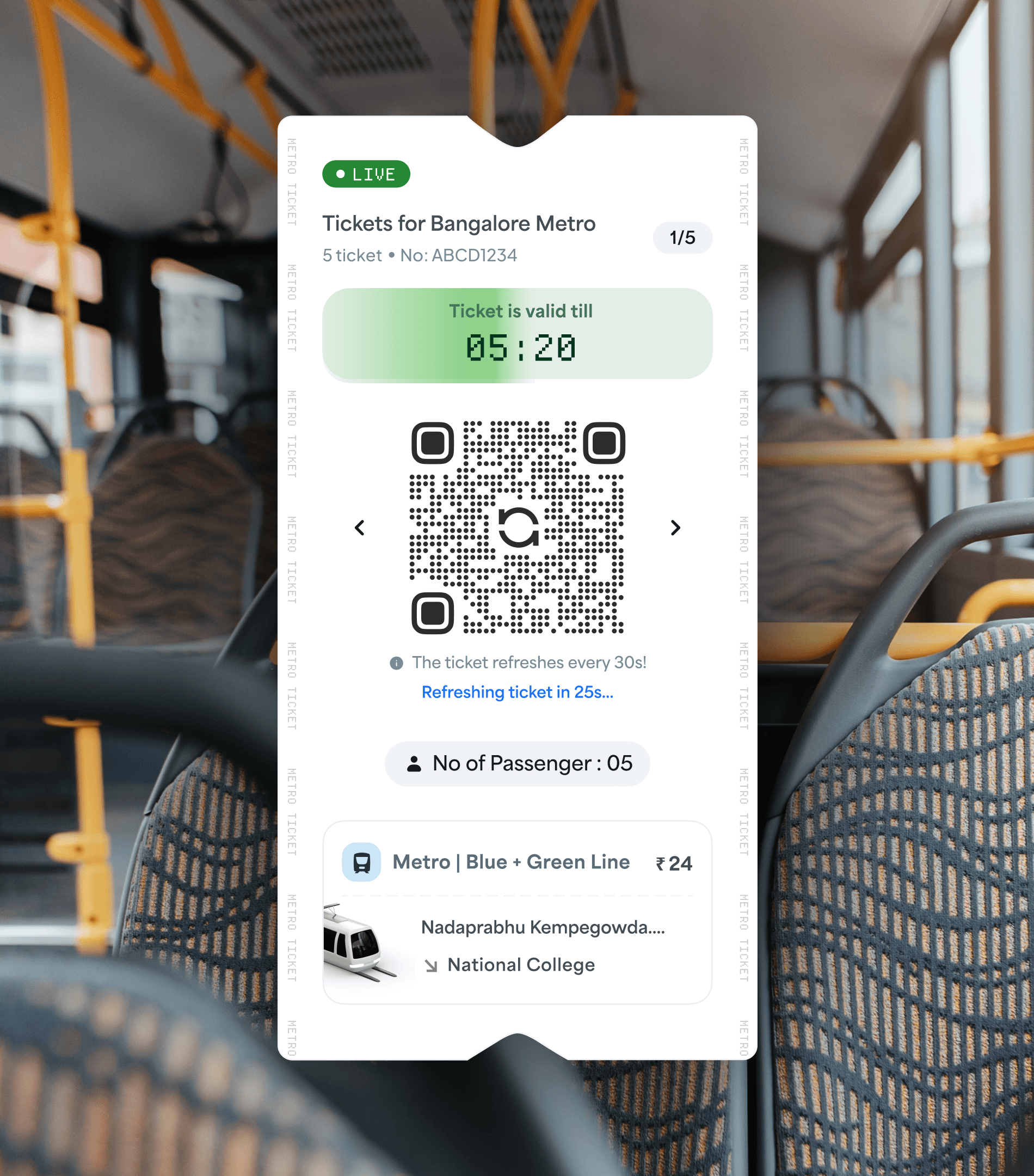
Seamless mode-switching & clear fare visibility
Simple interface, real-time arrival info
Solution
After understanding user pain points and studying existing products, we focused on making public transport as effortless and transparent as booking a cab.
We designed solutions that aimed to:
Make public transport as effortless as booking a cab or auto.
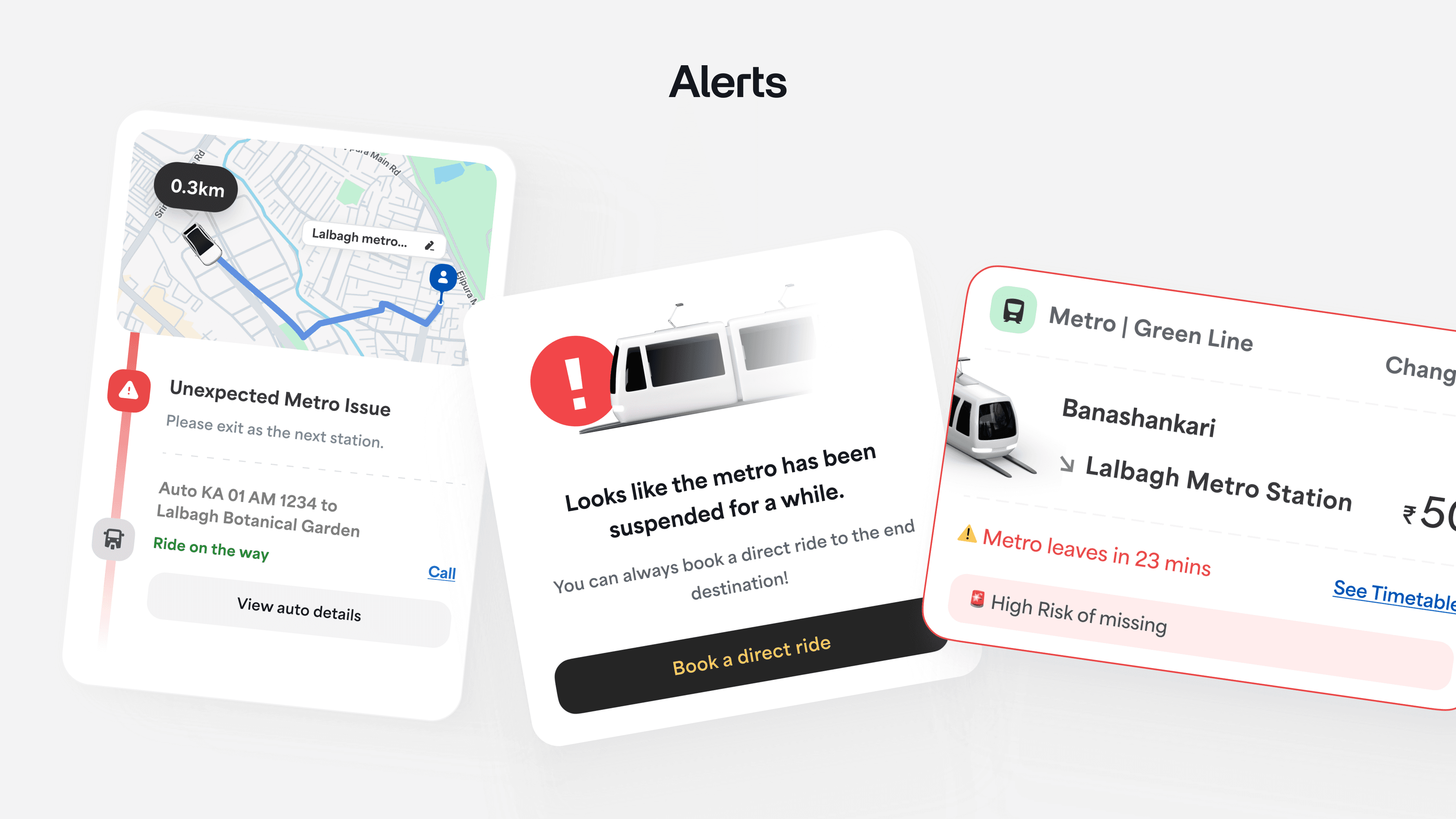
Transparent updates on pricing, process, and booking helped strengthen trust.
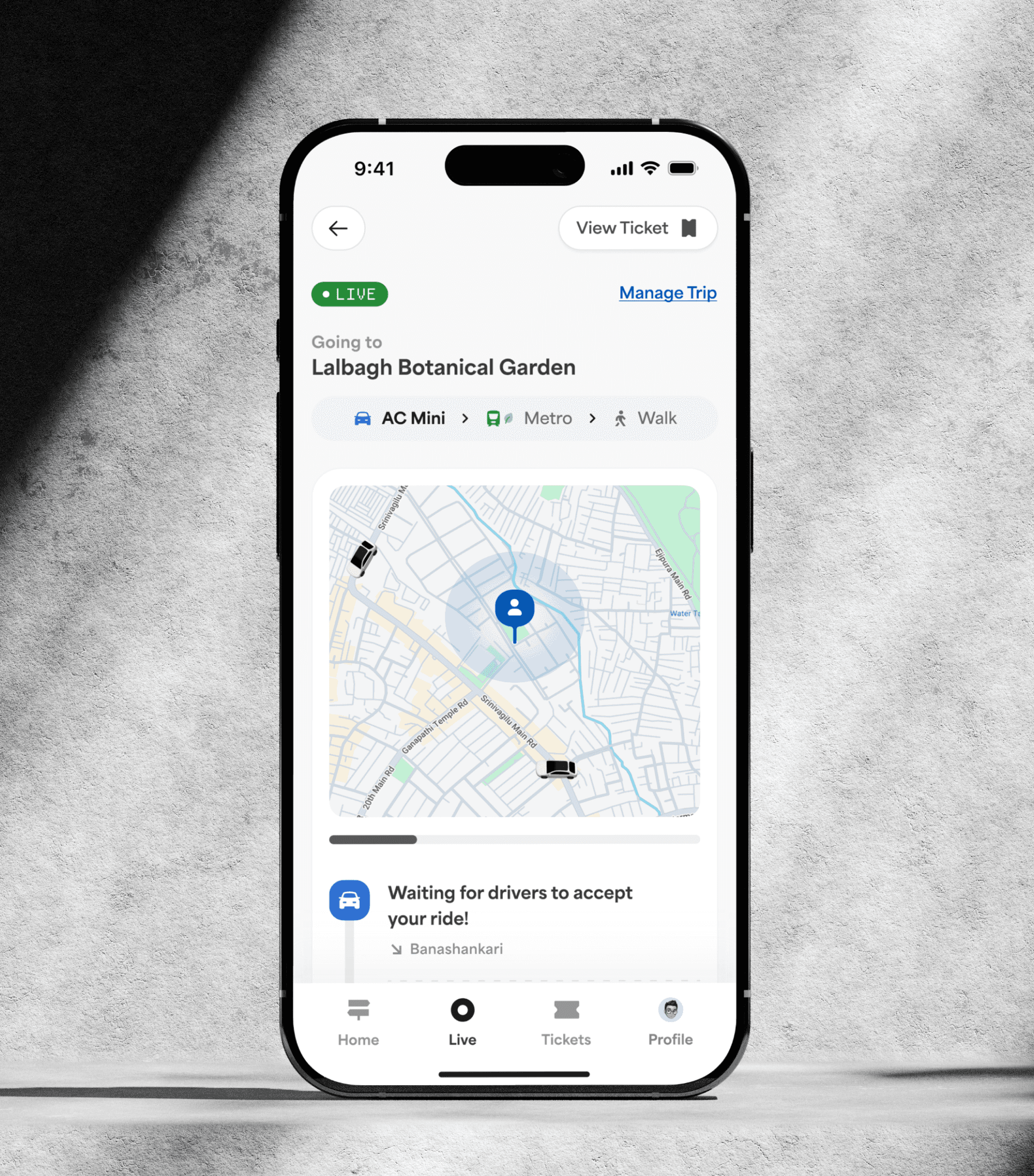
Guide users through every step of their journey — from first mile to last, across all modes.
Enable one tap access to public transport options, showing nearby metro, bus, and auto choices in one view.
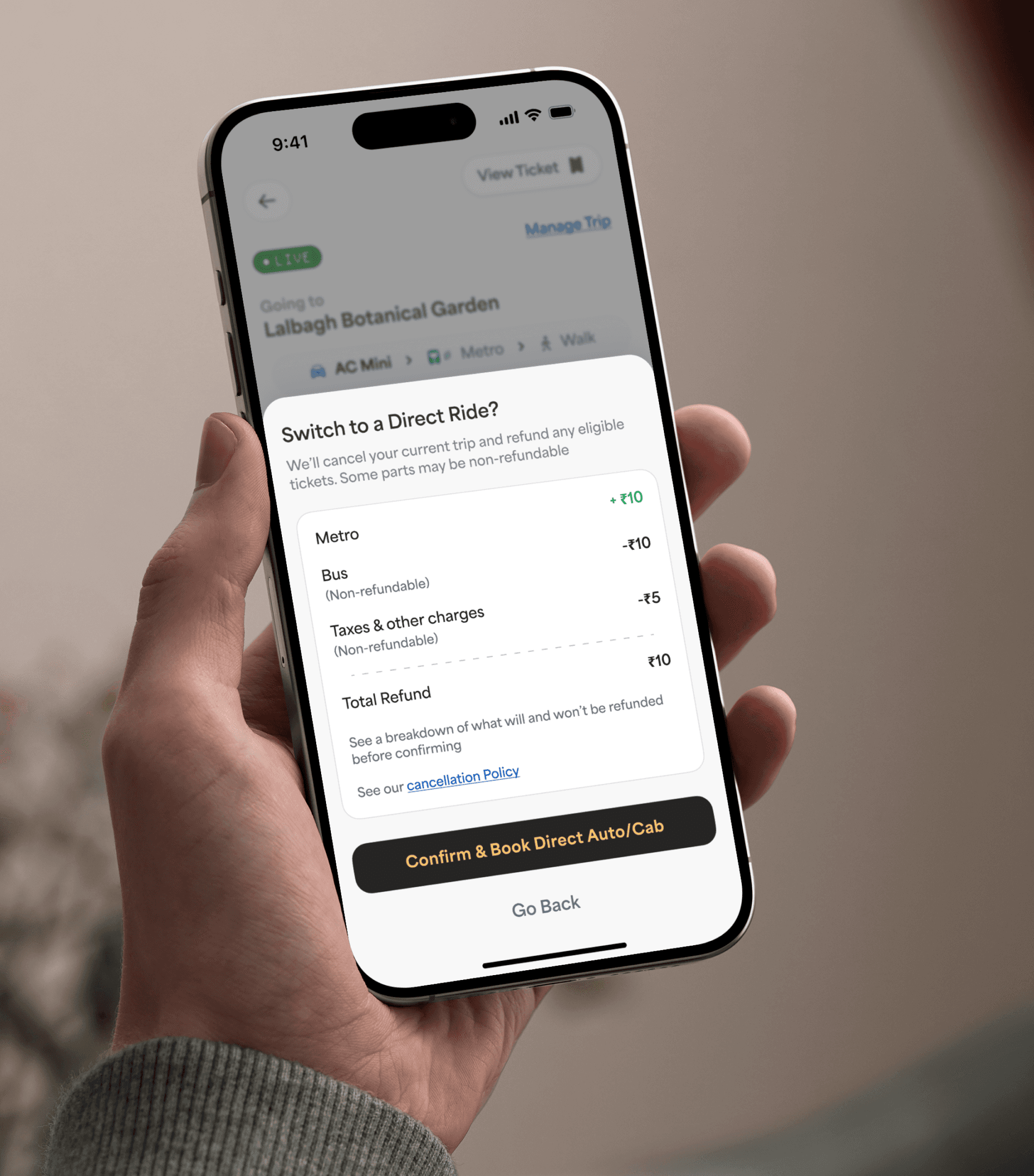
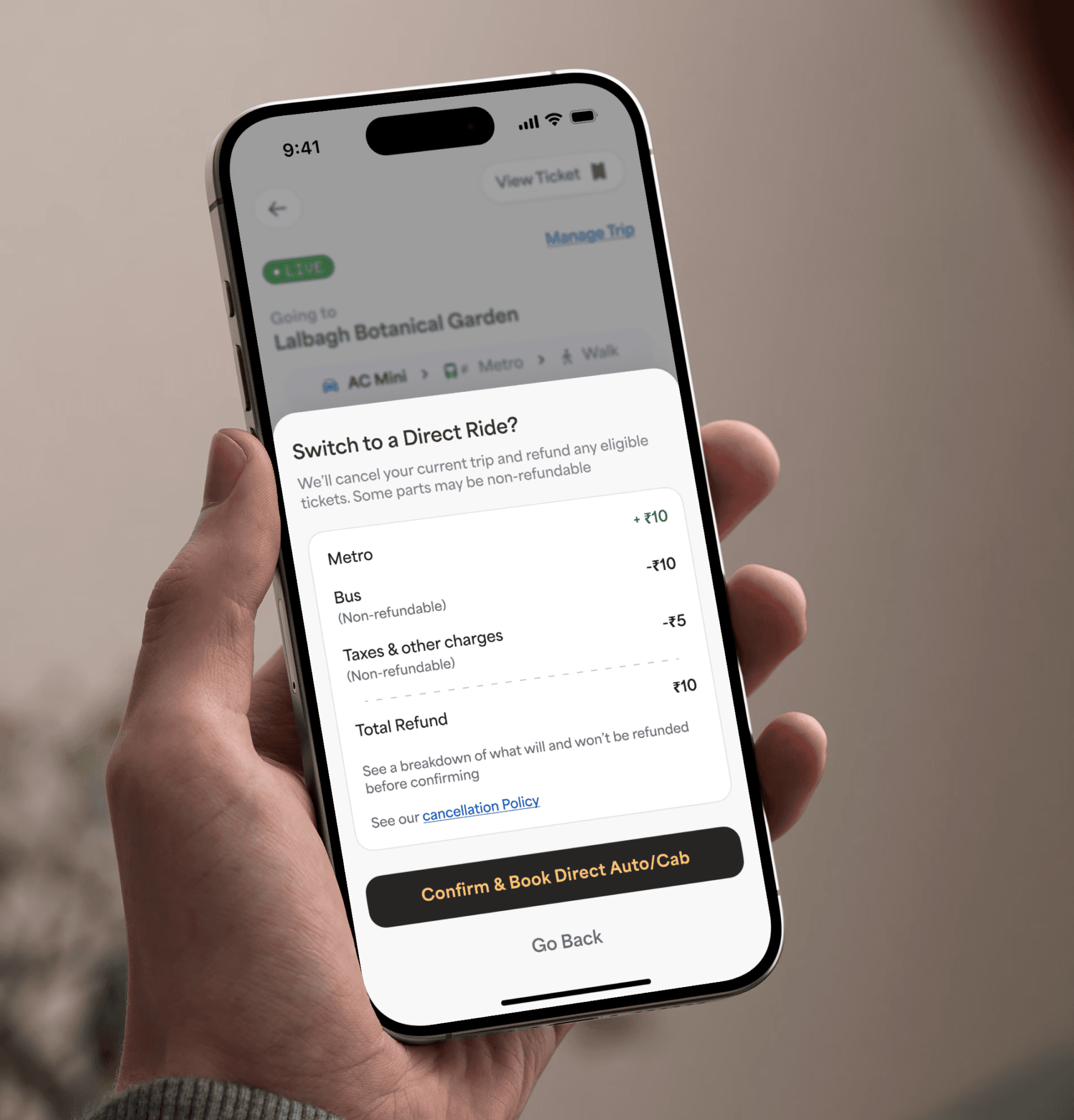
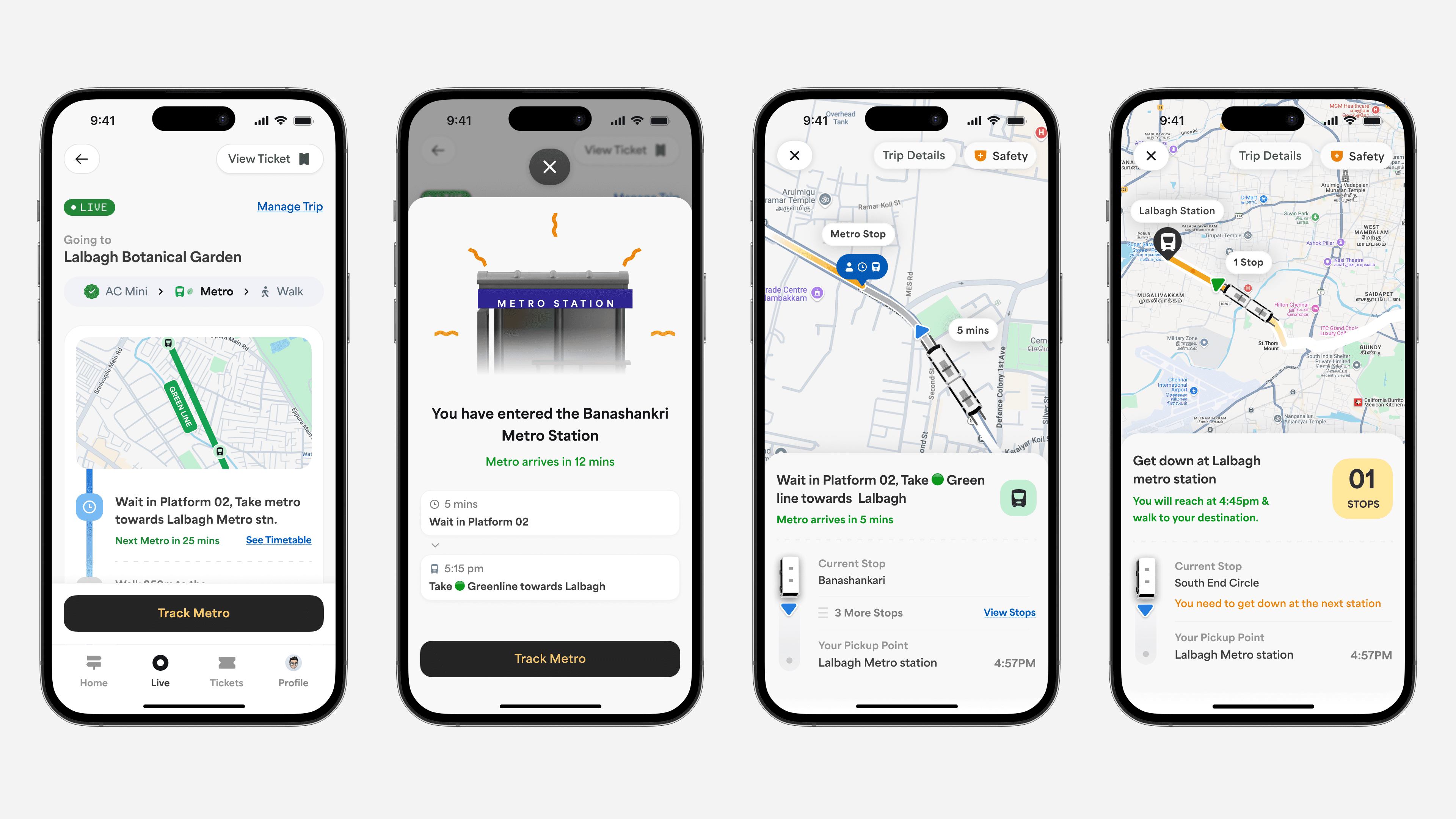
Guiding users through every step
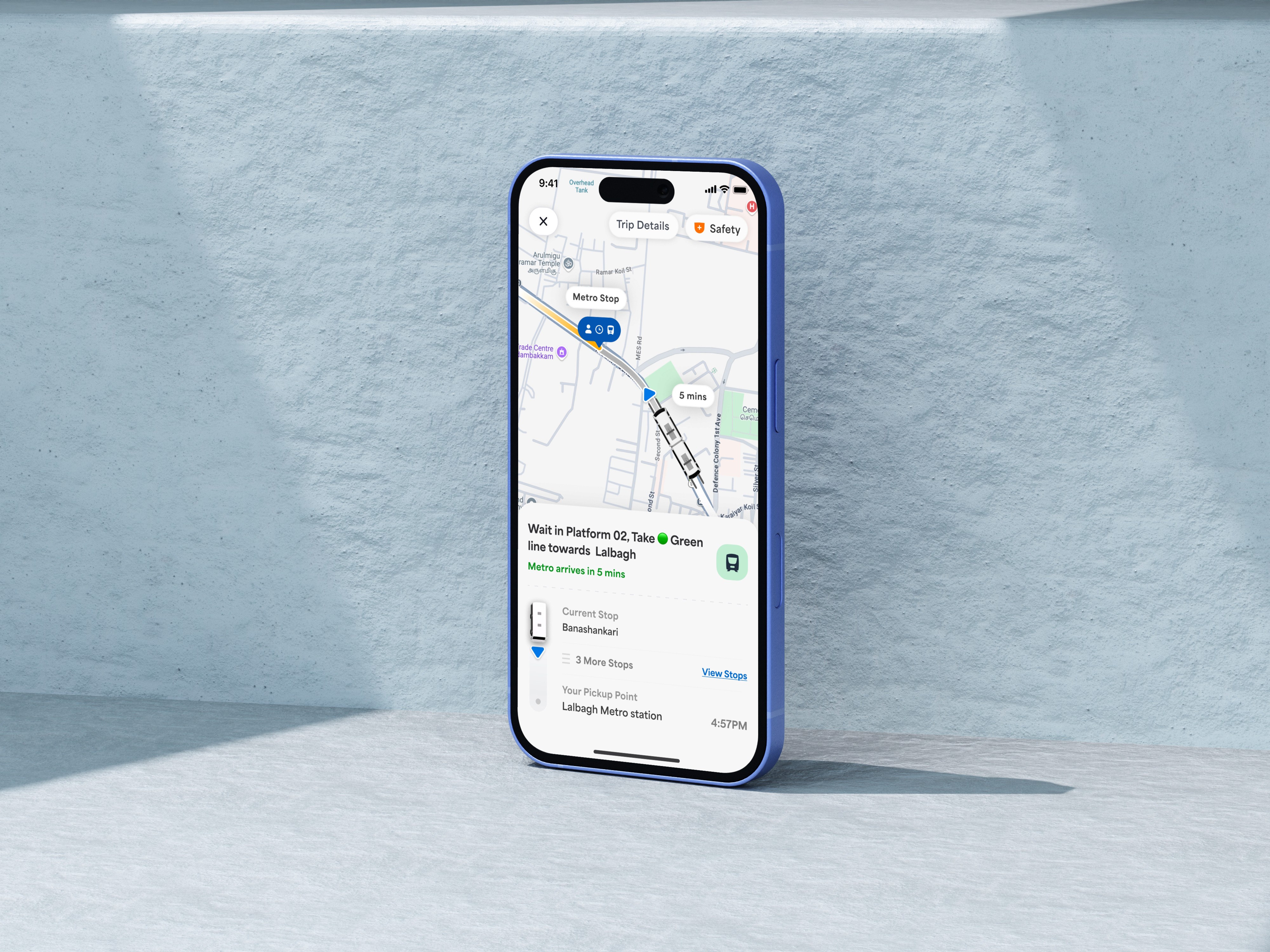
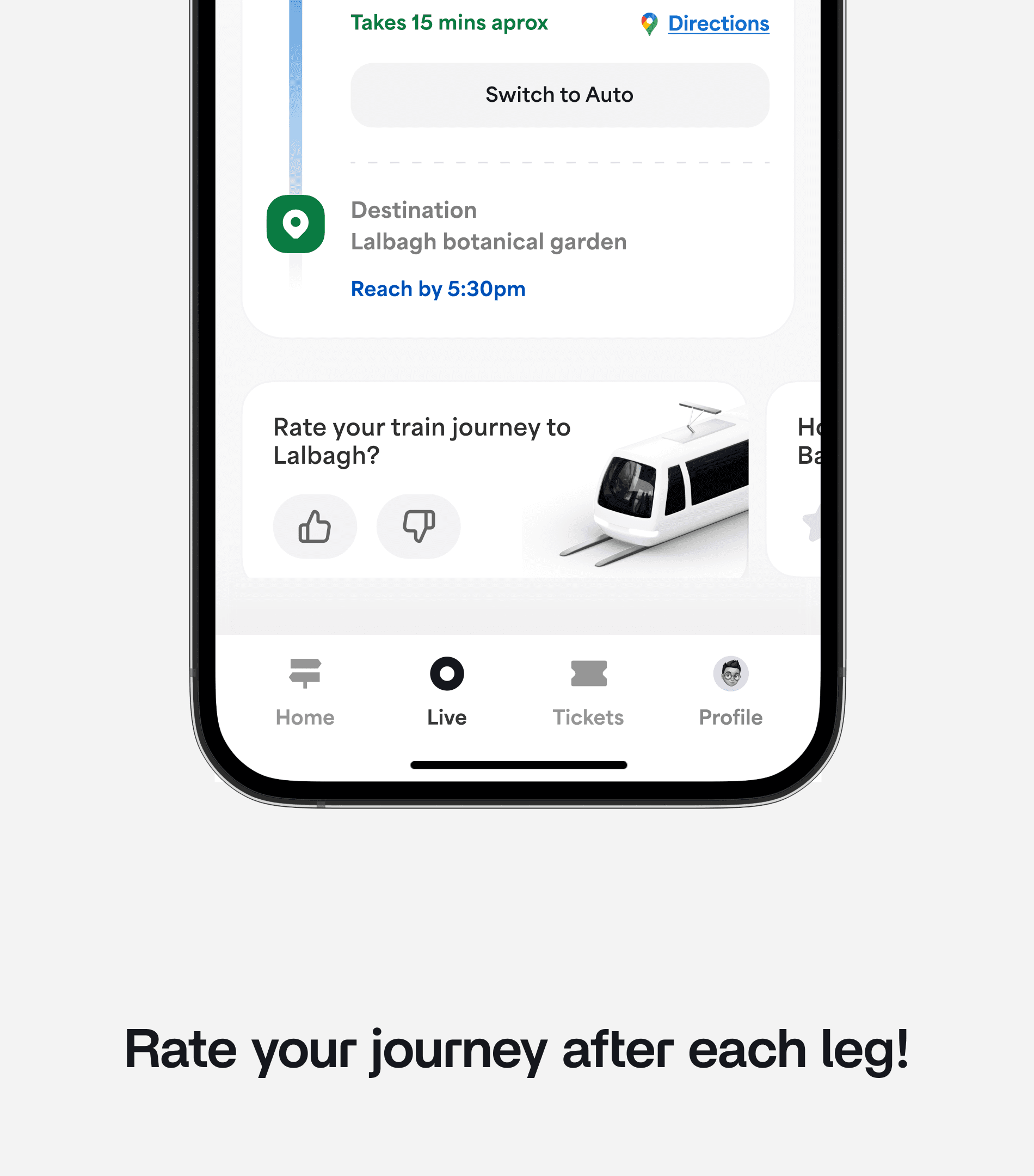
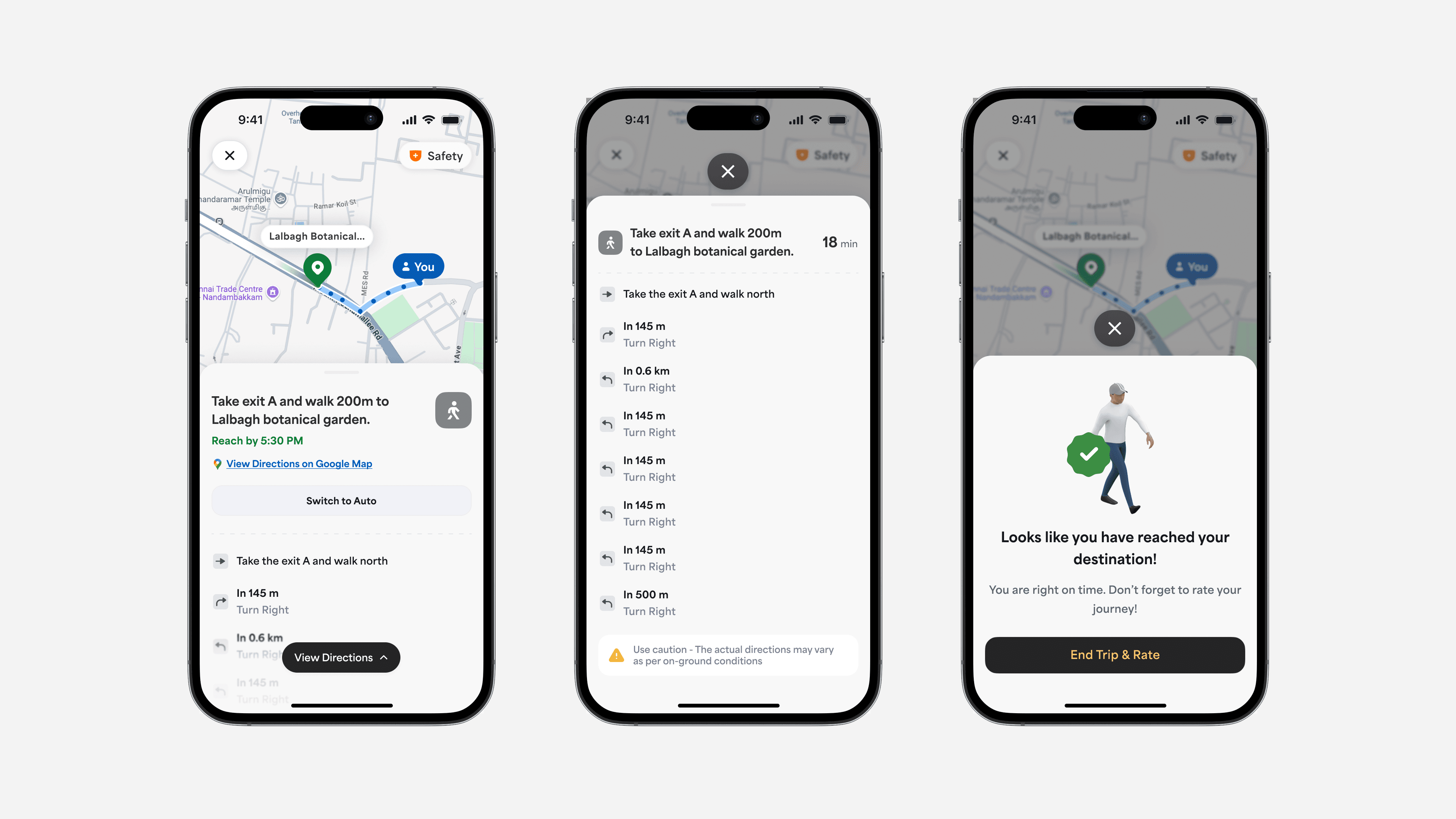
Walking directions so users can find their way to transit stops without guessing.
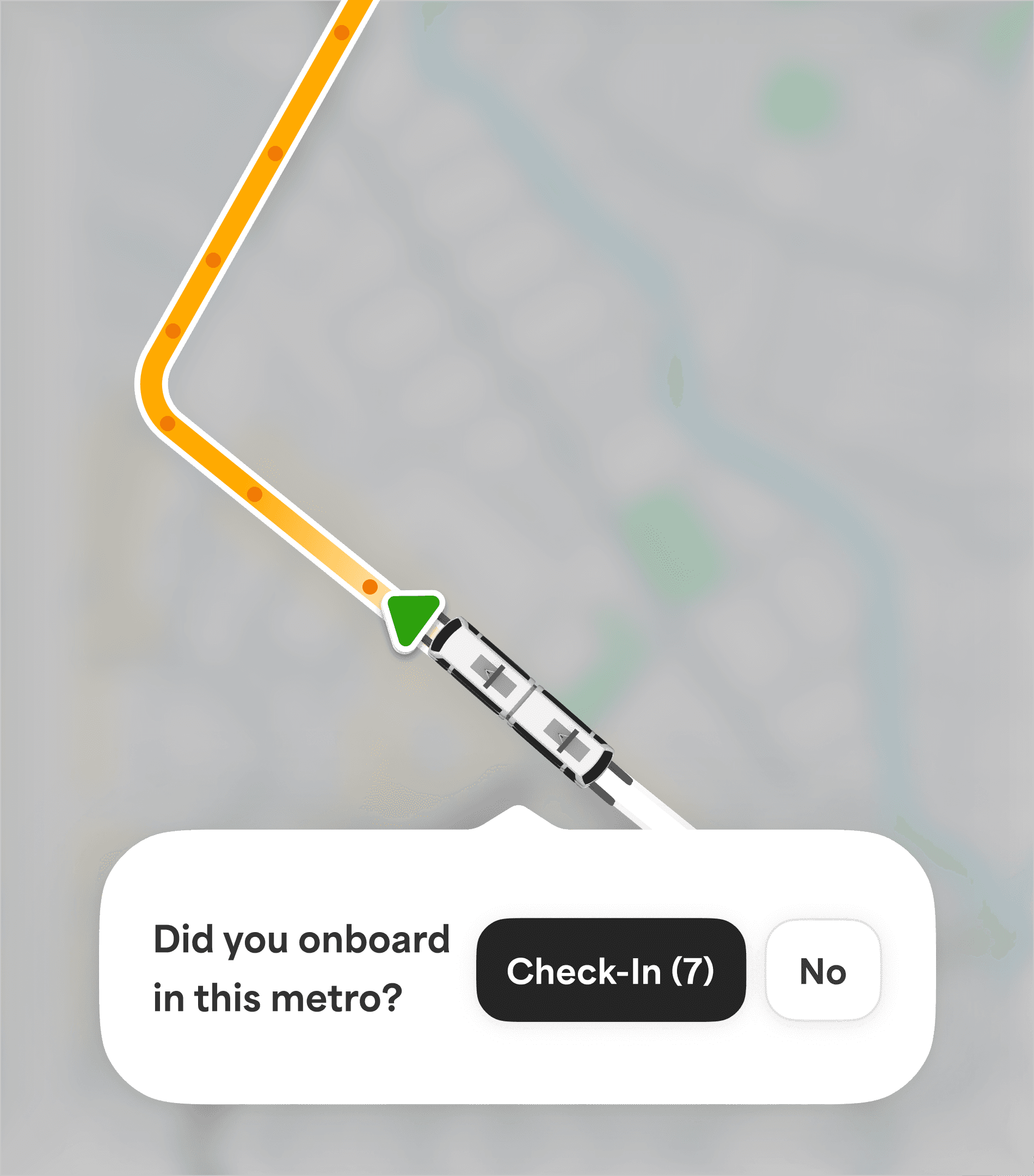
Real-time transit updates to know exactly when the next bus, metro, or train is arriving.
Seamless transitions between modes, with simple prompts guiding what to do next.
Results and Impact
We ran a round of user testing to observe how people navigated the multimodal flow and where friction remained. Across sessions, three clear themes emerged.
What users responded to
The seamless mode-switching and route transparency resonated strongly. Users found it intuitive enough to recommend to others — a strong signal of trust in a domain where fragmentation had been the norm.
What needed rethinking:
Users flagged mandatory metro ticket booking as friction; we made it opt-in. A driver cancellation mid-journey also exposed a gap in recovery flows — a key input for how we design resilience into multimodal trips.
Learnings & Outcome
The refined experience shipped as Chennai One — a standalone app built and refined by the local Chennai team. It marks a meaningful step toward real multimodal travel in India, and validates that the design direction was worth betting on.
